


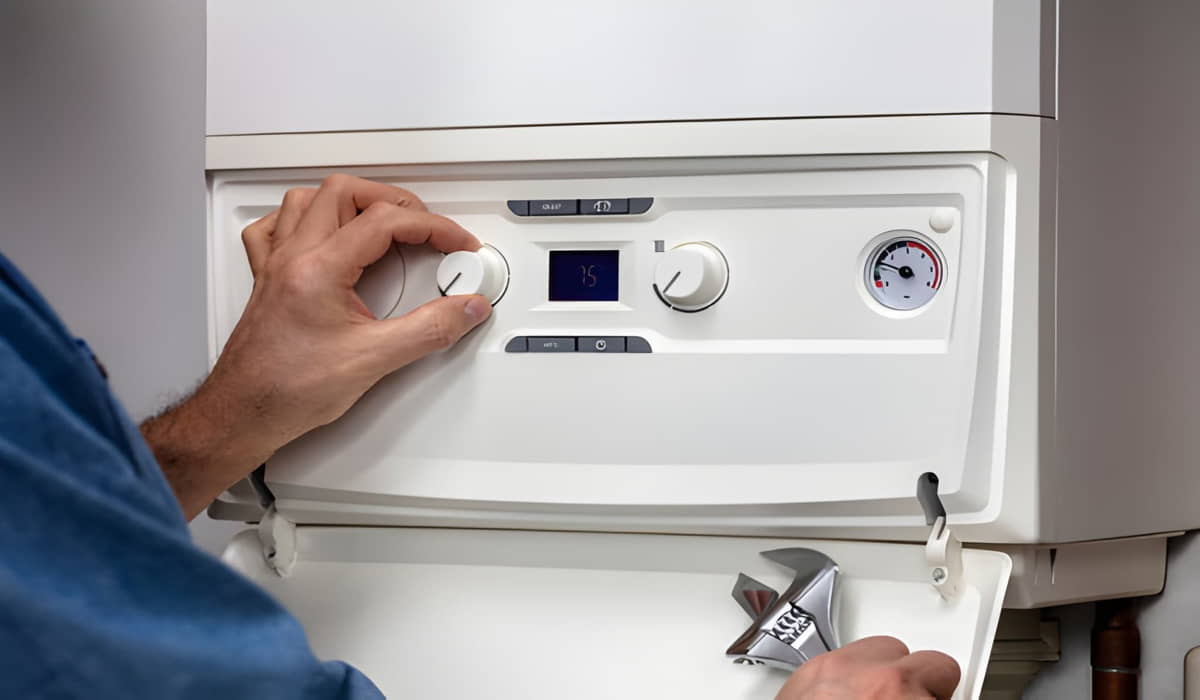
A water heater that suddenly stops producing hot water can be frustrating, especially when you need a shower, wash dishes, or do laundry. Sometimes the problem is simple, such as an incorrect temperature setting or a tripped breaker. In other cases, the issue may involve a faulty heating element, thermostat, burner, sediment buildup, or another internal component.
Before assuming the water heater needs to be replaced, it is worth checking a few common causes. The right troubleshooting steps depend on whether you have an electric water heater, gas water heater, or tankless system.
If your unit is leaking, producing unusual smells, making loud noises, or showing signs of an electrical or gas problem, stop troubleshooting and contact a qualified plumber or technician.
Check the Water Heater Temperature Setting
The first thing to check is the temperature setting.
Someone may have accidentally lowered the thermostat, or the setting may have changed during previous maintenance.
For many household water heaters, a setting around 120°F (49°C) is commonly recommended for a balance between hot-water comfort and scalding risk. However, follow your manufacturer’s instructions and local requirements.
If the setting is correct but the water remains cold, another problem is likely present.
Check Whether the Problem Affects All Hot Water
Turn on several hot-water faucets around the house.
If only one faucet has a problem, the water heater may not be the cause. The issue could be a faulty faucet cartridge, mixing valve, or local plumbing problem.
If every faucet produces cold or lukewarm water, the water heater itself is more likely to be responsible.
This simple test can help narrow down the problem before you start checking the heater.
Why an Electric Water Heater May Not Get Hot
Electric water heaters use heating elements to warm the water inside the tank. If one or both elements fail, the heater may produce lukewarm water or no hot water at all.
Check the Circuit Breaker
An electrical water heater typically has a dedicated circuit.
Look at your electrical panel to see whether the water-heater breaker has tripped.
If it has tripped, reset it once by switching it completely off and then back on.
If the breaker trips again, do not repeatedly reset it. A recurring trip can indicate an electrical fault, damaged wiring, or a problem with the heater.
At that point, a qualified professional should inspect the system.
A Heating Element May Have Failed
Electric water heaters generally have one or two heating elements.
Over time, heating elements can burn out or develop electrical faults. When an element fails, the heater may struggle to produce enough hot water.
Common signs include:
- Water is only lukewarm
- Hot water runs out unusually quickly
- The heater takes much longer to recover
- There is no hot water at all
Testing and replacing heating elements involves electrical components, so this repair is better handled by a qualified technician if you are not experienced with electrical work.
The Thermostat May Be Faulty
Electric water heaters use thermostats to control water temperature.
A defective thermostat may prevent the heating element from switching on at the correct temperature.
If the breaker is working and the elements appear functional but the water remains cold, the thermostat may need professional testing or replacement.
Why a Gas Water Heater May Not Get Hot
Gas water heaters use a burner to heat the water. Several issues can prevent the burner from operating properly.
Check the Pilot Light
Older gas water heaters may have a standing pilot light.
If the pilot light goes out, the burner may not ignite and the water will remain cold.
Some units include manufacturer-specific relighting instructions. Follow the instructions printed on the water heater rather than improvising.
If the pilot repeatedly goes out, there may be an issue with the thermocouple, gas supply, ventilation, or another component.
Check the Gas Supply
Make sure the gas supply has not been accidentally shut off.
If other gas appliances in the home are also not working, the problem may involve the home’s gas supply rather than the water heater itself.
If you smell gas, do not attempt to troubleshoot the heater. Leave the area and contact the appropriate gas emergency service or qualified professional.
The Burner May Need Cleaning
A gas water heater burner can become dirty or obstructed over time.
A dirty burner may produce a weak flame or fail to operate correctly.
Gas combustion equipment should be inspected and serviced by a qualified professional, particularly if the burner has unusual flames, soot, or signs of incomplete combustion.
The Water Heater Has Power, but the Water Is Still Cold
If your heater appears to be operating but the water remains cold, several possibilities exist.
The problem could be:
- Failed heating element
- Faulty thermostat
- Burner problem
- Sediment buildup
- Broken dip tube
- Faulty control system
- Incorrect temperature setting
Determining which component has failed may require testing with specialized equipment.
Sediment Buildup Can Reduce Heating Performance
Minerals naturally occur in water.
Over time, these minerals can settle at the bottom of a storage tank and form sediment.
Heavy sediment buildup can reduce the efficiency of the heating process and may cause:
- Lukewarm water
- Longer heating times
- Reduced hot-water capacity
- Popping or rumbling sounds
Regular maintenance can help reduce sediment-related problems, particularly in areas with hard water.
Tank flushing should be performed according to the manufacturer’s instructions, and professional assistance may be appropriate if the system has not been maintained for a long time.
The Dip Tube Could Be Damaged
A dip tube is an internal component found in many traditional tank water heaters.
Its job is to direct incoming cold water toward the bottom of the tank, where it can be heated.
If the dip tube breaks or deteriorates, cold incoming water can mix improperly with hot water near the top of the tank.
The result may be lukewarm water or hot water that runs out much faster than usual.
Because the dip tube is located inside the tank, diagnosing and replacing it is generally a job for a professional.
Why You Have Hot Water, but It Runs Out Quickly
Sometimes the water heater does produce hot water, but the supply doesn’t last as long as it used to.
Possible causes include:
- Failed heating element
- Sediment buildup
- Incorrect thermostat setting
- Damaged dip tube
- Increased household water demand
- Undersized water heater
For example, if more people are now living in the home or multiple appliances are using hot water simultaneously, the existing heater may simply be struggling to meet demand.
What About a Tankless Water Heater?
Tankless water heaters work differently because they heat water as it passes through the system.
If a tankless unit isn’t producing hot water, possible causes include:
- Power interruption
- Gas supply problem
- Flow-rate issue
- Mineral buildup
- Dirty filter
- Faulty temperature sensor
- System error code
Check the manufacturer’s display for an error code and consult the owner’s manual.
Tankless systems can also require periodic descaling, particularly in areas with hard water.
Check the Water Flow
A tankless water heater may require a minimum flow rate before it activates.
If the flow is too low, the system may not turn on.
A clogged faucet aerator or showerhead can sometimes reduce flow enough to create confusion about whether the heater is working.
Try another hot-water fixture to determine whether the issue is isolated to one outlet.
When Should You Call a Plumber?
Some water-heater problems are not suitable for DIY troubleshooting.
Call a qualified plumber or water-heater technician if:
- The unit is leaking
- The breaker repeatedly trips
- The pilot light repeatedly goes out
- You smell gas
- You see damaged wiring
- The tank is heavily corroded
- The pressure relief valve is leaking
- The heater makes unusual noises
- The water is excessively hot
- The unit produces no hot water after basic checks
- You suspect an internal component has failed
A professional can safely diagnose the heater and determine whether repair or replacement makes more financial sense.
Should You Repair or Replace the Water Heater?
The age and condition of the water heater matter.
A relatively new heater with a failed thermostat, heating element, or other replaceable component may be worth repairing.
An older unit with significant corrosion, repeated failures, or a leaking tank may be nearing the end of its useful life.
A leaking storage tank is particularly important because the tank itself generally cannot be repaired reliably once it has developed a serious internal leak.
A professional can assess the unit and explain the available options.
How to Prevent Water Heater Problems
Regular maintenance can help extend the life of your water heater and reduce unexpected problems.
Consider:
- Checking the temperature setting
- Inspecting the unit for leaks
- Following the manufacturer’s maintenance schedule
- Flushing a storage tank when appropriate
- Checking anode-rod condition when applicable
- Scheduling professional inspections
- Addressing unusual noises early
Don’t ignore small warning signs. A minor performance issue can sometimes indicate a developing problem.
Frequently Asked Questions
Why is my water heater only producing lukewarm water?
Common causes include a faulty heating element, thermostat problem, sediment buildup, damaged dip tube, or incorrect temperature setting.
Why does my water heater have no hot water?
For electric units, a tripped breaker, failed heating element, or thermostat problem may be responsible. Gas units may have pilot-light, burner, or gas-supply issues.
How long does a water heater take to heat up?
The recovery time depends on the type and size of the heater, the incoming water temperature, the thermostat setting, and the heating capacity of the system.
Can sediment cause a water heater to stop working?
Heavy sediment buildup can reduce efficiency and contribute to heating problems. It may also cause unusual popping or rumbling sounds in tank-style heaters.
Should I repair or replace my water heater?
A repair may make sense for a newer unit with a replaceable failed component. An older, heavily corroded, or leaking unit may be a better candidate for replacement.
Final Thoughts
When a water heater isn’t getting hot, don’t immediately assume the entire unit needs to be replaced. Start with simple checks such as the temperature setting, power supply, and whether the problem affects every hot-water fixture.
For electric heaters, failed heating elements and thermostats are common possibilities. Gas systems can have pilot-light, burner, or gas-supply issues, while tankless units may experience flow, scaling, or control problems.
If the issue involves gas, electricity, leaks, or internal components, professional diagnosis is the safest approach. Addressing the problem early can restore your hot-water supply and help prevent a small issue from becoming a more expensive repair.