


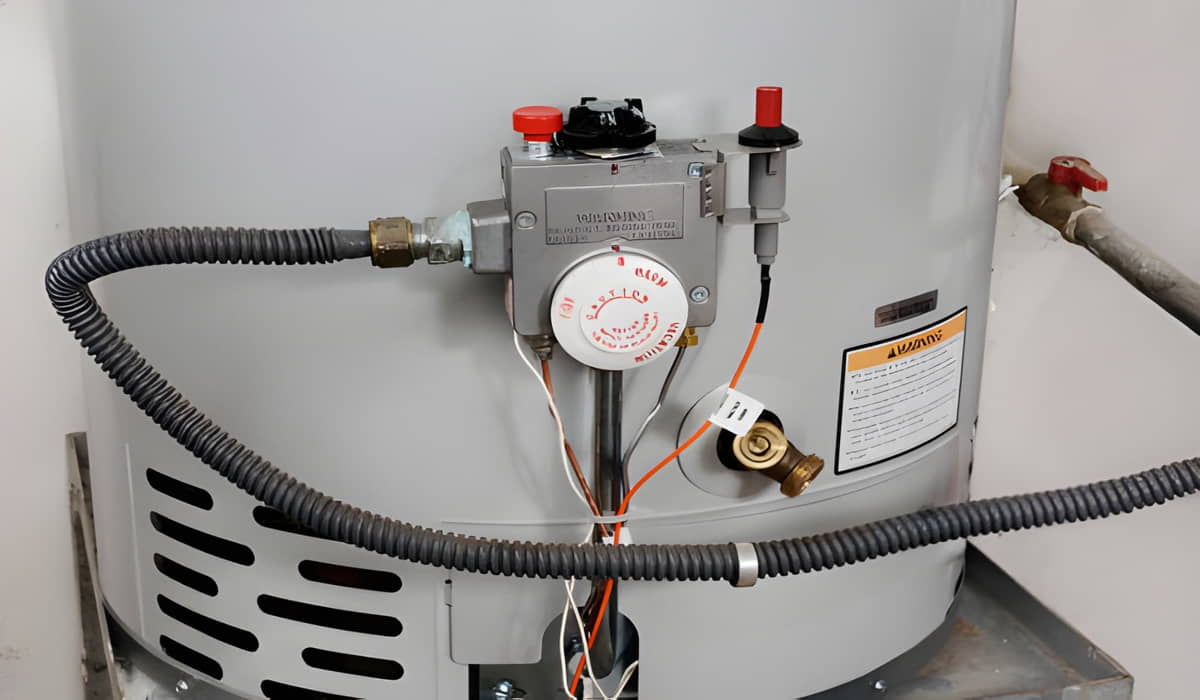
A water heater does not always need to be replaced when it stops working properly. In many cases, a faulty part, electrical component, valve, thermostat, heating element, or other repairable problem can bring the unit back to normal operation.
But repair is not always the best choice.
If the water heater is old, leaking from the tank, badly corroded, losing performance, or requiring repairs again and again, putting more money into it may only delay a replacement that is already needed.
So, when should you repair a water heater, and when should you replace it?
The answer depends on several factors:
The type of problem + age of the unit + condition of the tank + repair cost + repair history + efficiency + expected remaining life
For storage water heaters, the U.S. Department of Energy estimates an average product lifetime of around 15 years. ENERGY STAR also advises homeowners to consider replacing water heaters that are around 10 years old or older, especially when signs of deterioration or failure appear.
That does not mean every 10 year old water heater must be replaced immediately. Age is one part of the decision. The condition of the tank and the type of failure are often just as important.
When Should You Repair a Water Heater?
Repair usually makes sense when the main tank is still in good condition, and the problem is caused by a replaceable component.
For example, an older water heater may stop heating properly because of a failed heating element or thermostat. Replacing that component can restore hot water without replacing the entire unit.
Repair is often worth considering when:
- The water heater is relatively young
- The tank itself is not leaking
- There is little or no serious corrosion
- The problem is isolated to one component
- The repair cost is reasonable
- The unit has not needed repeated repairs
- The water heater still meets the household’s hot-water needs
The important question is not simply, “Is something broken?”
It is:
Is the underlying water heater still in good enough condition to justify repairing the failed part?
If the answer is yes, repair can be a sensible option.
When Should You Replace a Water Heater?
Replacement becomes more attractive when the problem affects the tank itself or when the unit is approaching the end of its useful life.
Common reasons to consider replacement include:
- The tank is leaking
- Significant corrosion is visible
- Rust is appearing in the hot water
- The unit is old and experiencing multiple problems
- Repairs are becoming frequent
- Hot-water performance is declining
- Operating costs are increasing
- A major component has failed on an aging unit
- The existing water heater no longer meets the household’s needs
ENERGY STAR identifies visible corrosion, leaking, rust in the water, insufficient hot water, and unusual rumbling or vibration as warning signs that an older water heater may be approaching failure.
Replacement is particularly important when the storage tank itself has failed. A heating element or thermostat can be replaced. A severely deteriorated tank is a different situation.
How Old Is Your Water Heater?
Age is one of the first things to check when deciding between repair and replacement.
A water heater that is only a few years old and develops an isolated component problem may be a good repair candidate.
A much older unit with several problems deserves a different calculation.
DOE’s analysis estimates an average product lifetime of approximately 15 years for storage water heaters.
ENERGY STAR uses a more conservative planning point, advising homeowners to consider replacement when a water heater is around 10 years old or older, particularly because older units may begin showing inconsistent heating or develop leaks and other failure signs.
These numbers should be treated as decision points, not expiration dates.
A 12-year-old unit that has been maintained well and has a minor repair may continue operating after the repair. A 7-year-old unit with severe tank corrosion may have a much stronger case for replacement.
How to Find the Age of a Water Heater
Look for the manufacturer’s label on the unit.
You may find:
- Manufacturer name
- Model number
- Serial number
- Manufacturing information
- Capacity
- Energy information
Some manufacturers encode the production date in the serial number, while others provide the date more directly.
If the date is unclear, a professional can help identify the unit’s age from the model and serial information.
Signs Your Water Heater Needs Repair
Not every water heater problem means the entire unit has failed.
No Hot Water
If the water is completely cold, the cause depends on the type of water heater.
For an electric unit, a heating element, thermostat, electrical connection, or control problem may be involved.
For a gas unit, the issue could involve ignition, the burner, gas supply, thermostat, or another component.
A diagnosis is necessary before deciding whether the heater itself needs replacement.
Not Enough Hot Water
A water heater that produces less hot water than it used to may have a component problem, sediment buildup, capacity issues, or age-related deterioration.
If the unit is relatively new, repair or maintenance may restore normal performance.
If the problem occurs on an older unit along with other warning signs, replacement may make more sense.
Slow Heating
Slow recovery can have several causes.
Possible factors include:
- Heating element problems
- Burner problems
- Thermostat issues
- Sediment accumulation
- Incorrect settings
- Increased household demand
- Aging equipment
The solution depends on the underlying cause.
Thermostat Problems
The thermostat controls water temperature and tells the heating system when to operate.
A faulty thermostat can produce symptoms such as:
- Water that is not hot enough
- Water that becomes excessively hot
- Inconsistent temperatures
- No hot water
If the tank is in good condition, replacing a faulty thermostat may be preferable to replacing the entire water heater.
Heating Element Problems
Electric water heaters commonly use heating elements to heat the water.
A failed element can cause:
- No hot water
- Limited hot water
- Slow recovery
- Inconsistent heating
A heating element is a replaceable component, so this type of failure does not automatically mean the tank needs replacement.
However, electrical water-heater repairs involve shock hazards. Power should be disconnected before servicing, and component specifications must match the water heater. DOE service documentation specifically warns about electrical shock hazards when replacing heating elements.
Minor Leaks Around Connections
Water near a water heater does not always mean the tank itself has failed.
A leak may come from:
- Pipe connection
- Fitting
- Valve
- Drain connection
- Other external component
If the tank remains sound, repairing the leaking connection may solve the problem.
But water coming from the tank itself is a much more serious replacement signal.
Signs Your Water Heater Needs Replacement
Some symptoms point more strongly toward replacement.
The Water Heater Tank Is Leaking
A leaking tank is one of the most important warning signs.
A storage water heater holds a large quantity of water. Once the tank itself has deteriorated and developed a structural leak, replacing a valve or thermostat will not solve the underlying problem.
First, determine where the water is coming from.
If the leak originates from an external fitting, the component may be repairable.
If the tank itself is leaking, replacement is generally the appropriate direction.
Significant Corrosion
Corrosion can affect the connections, valves, exterior surfaces, or tank.
Minor surface corrosion does not necessarily mean the entire heater has failed.
However, substantial corrosion on an aging tank can indicate that the equipment is approaching the end of its service life.
ENERGY STAR specifically lists visible corrosion around water lines or on the unit as a warning sign for older water heaters.
Rust-Colored Hot Water
Rust appearing in hot water can be a sign of corrosion inside the water-heating system.
This deserves inspection rather than being treated as a normal part of an older appliance.
If rust appears together with tank corrosion, leaks, or other age-related problems, replacement becomes a stronger consideration.
Repeated Repairs
One repair does not necessarily mean you need a new water heater.
Three or four repairs over a relatively short period are a different matter.
Repeated failures can indicate that several components are reaching the end of their useful service life.
At that point, adding another repair bill to an aging unit may not provide good long-term value.
ENERGY STAR uses frequent repairs and rising energy costs as general signs that aging equipment may warrant replacement in other home equipment contexts, and its water-heater guidance similarly encourages planning replacement before an older unit fails unexpectedly.
The Water Heater Is Getting Too Old
An old unit does not automatically need replacement.
But age changes the calculation.
For example:
5 year old water heater + failed thermostat + sound tank
may strongly favor repair.
Compare that with:
13 year old water heater + tank corrosion + repeated repairs + inconsistent hot water
and replacement becomes much more reasonable.
Water Heater Leaking: Repair or Replace?
This is one of the most important questions homeowners ask.
The answer depends heavily on where the water is coming from.
Leak From a Pipe or Fitting
A leak from an external connection may be repairable.
The connection may need tightening, resealing, or component replacement.
Leak From a Valve
A defective valve can sometimes be replaced without replacing the entire water heater.
The surrounding components and tank should still be inspected.
Leak From the Tank
A tank leak is a different situation.
If the storage tank itself has developed a structural leak, replacing a small external component will not restore the tank’s integrity.
In this situation, replacement is usually the more appropriate long-term solution.
Water Around the Base
Water around the base should not automatically be assumed to be a tank leak.
It may come from another component and travel along the floor or heater before appearing at the bottom.
That is why identifying the actual source matters.
If a substantial leak is occurring, shut down the water supply and the heater according to the manufacturer’s instructions and seek professional assistance, particularly for gas or electrical equipment.
Is It Worth Repairing an Old Water Heater?
Sometimes, yes.
Age alone does not make repair pointless.
Suppose a 10-year-old water heater has a faulty thermostat but:
- The tank is dry
- There is little corrosion
- Hot water performance was previously good
- No other components are failing
- The repair cost is reasonable
Repair may still be sensible.
Now consider an older unit that has:
- Tank corrosion
- Rust-colored water
- Repeated heating problems
- Previous repairs
- Increasing leaks
- Poor hot-water performance
In that case, another repair may only postpone replacement.
The goal is to evaluate the remaining value of the appliance, not just the immediate repair.
Repair Cost vs. Replacement Cost
Cost is an important part of the decision, but it should not be the only factor.
Consider:
Repair cost
plus
Expected future repairs
plus
Operating cost
compared with:
Replacement cost
plus
Expected service life
plus
Energy savings
plus
Warranty
A cheaper repair is not always cheaper in the long run.
For example, spending money on a small repair may be sensible if the water heater is otherwise healthy. But repeatedly repairing an old unit can eventually cost more than replacing it.
There is no universal percentage rule that works for every home.
The correct decision depends on the condition and age of the particular water heater.
Does a New Water Heater Save Money?
A replacement can offer more than reliability.
Newer water heaters may provide improved energy performance depending on the technology and model selected.
DOE notes that water heating can account for a significant portion of household energy consumption.
ENERGY STAR also identifies high-efficiency water heaters, including heat pump water heaters, as options that can reduce energy consumption compared with conventional technologies.
However, the most efficient option is not automatically the right choice for every home.
Consider:
- Available space
- Household hot-water demand
- Energy source
- Installation requirements
- Climate
- Upfront cost
- Operating cost
- Maintenance
- Local availability
When replacing a water heater, capacity also matters. ENERGY STAR recommends considering the existing unit’s capacity and the household’s hot-water demand when selecting a replacement.
Should You Replace an Old Water Heater Before It Fails?
If a water heater is getting old and already showing warning signs, planned replacement can be easier than waiting for a complete failure.
Waiting until the tank leaks heavily can turn a planned home improvement into an emergency.
A planned replacement gives you time to:
- Compare models
- Check capacity
- Compare energy options
- Obtain multiple estimates
- Check warranty terms
- Arrange installation
- Consider whether a different water-heating technology makes sense
Water Heater Repair vs. Replacement: Quick Decision Guide
| Situation | More Likely Choice |
|---|---|
| Newer unit with one failed component | Repair |
| Faulty thermostat | Repair |
| Failed heating element | Repair |
| Minor external fitting leak | Repair |
| Tank is in good condition | Repair may make sense |
| Older unit with one minor issue | Compare repair and replacement |
| Frequent repairs | Consider replacement |
| Significant corrosion | Consider replacement |
| Rust-colored water | Inspect; replacement may be needed |
| Tank itself is leaking | Replacement |
| Old unit with poor hot-water performance | Replacement becomes more attractive |
| Old unit with several simultaneous problems | Replacement |
The table is a starting point, not a substitute for inspection.
What Should You Check Before Deciding?
Before choosing repair or replacement, gather the following information:
1. Water Heater Age
Find the model and serial number and determine when the unit was manufactured.
2. Exact Problem
Is the issue:
- No hot water?
- Not enough hot water?
- A leak?
- Strange noise?
- Rust?
- Temperature fluctuation?
- Electrical problem?
- Burner problem?
3. Location of the Leak
Determine whether water is coming from a pipe, fitting, valve, drain or the tank itself.
4. Tank Condition
Look for visible corrosion, rust, and signs of deterioration.
5. Repair History
A unit that has required several repairs deserves a different evaluation from one experiencing its first failure.
6. Repair Estimate
Get the expected cost of the repair and ask what component is actually failing.
7. Replacement Cost
Compare the repair price with the installed cost of a suitable replacement.
8. Energy Performance
If the existing unit is old and inefficient, consider how a newer model could affect operating costs.
9. Household Demand
A replacement should provide enough hot water for the people and fixtures using it.
10. Warranty
Check both the current water heater’s remaining warranty and the warranty available on a replacement.
Can You Repair a Water Heater Yourself?
Some homeowners can perform basic checks, but water heaters can involve electricity, gas, hot water, pressure, combustion, and other safety hazards.
Do not treat a water heater like a simple household appliance.
For example, electric heating-element work involves electrical shock hazards, and gas-fired equipment requires proper handling of fuel and combustion components. DOE documentation specifically warns about electrical shock when servicing electric water heaters.
A homeowner can usually start with basic observations:
- Check whether the unit is leaking
- Look at the manufacturer’s label
- Identify the model
- Note the age
- Observe whether the problem affects all hot-water fixtures
- Check whether the issue is continuous or intermittent
For repairs involving electrical wiring, gas components, pressure-related components, or internal tank problems, professional service is the safer approach.
When Is Water Heater Replacement the Better Choice?
Replacement generally becomes the stronger option when several warning signs appear together.
For example:
Old age + repeated repairs + corrosion
is more concerning than:
Young unit + isolated component failure
Likewise:
Leaking tank + corrosion
is a much stronger replacement situation than:
Leaking connection + healthy tank
This is why the repair-versus-replace decision should never be based on age alone.
The most useful question is:
Is the water heater’s core structure and overall condition good enough to justify spending more money on repairs?
If yes, repair may extend its useful life.
If no, replacement can provide better long-term value and reduce the chance of another failure.
Final Verdict: Repair or Replace Your Water Heater?
The decision can be simplified into one framework:
Repair when the problem is isolated, and the water heater itself is still in good condition.
Replace when the tank is failing, the unit is significantly deteriorated, repairs are becoming frequent, or the age and operating performance make further investment difficult to justify.
A water heater around 10 years old deserves closer attention, particularly when warning signs appear. DOE estimates the average lifetime of storage water heaters at roughly 15 years, but individual units can perform differently depending on design, use, maintenance, and conditions.
So don’t replace a water heater simply because it has reached a certain birthday.
Look at the complete picture:
Age + tank condition + failure type + repair history + repair cost + energy performance + replacement cost
That gives you a much better basis for deciding whether to repair the existing unit or invest in a new one.
If the tank is leaking, corrosion is extensive, or the unit is showing several signs of failure at once, have a qualified professional assess it before the problem becomes a larger water or property damage issue.