


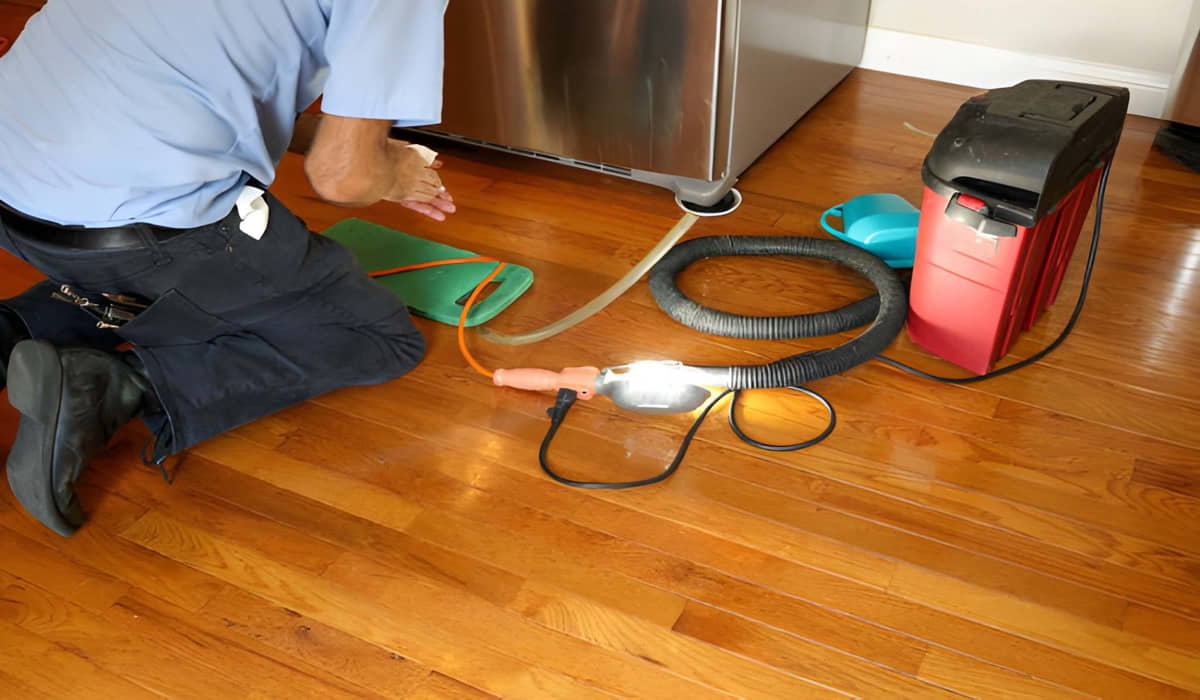
A refrigerator usually leaks water because of a clogged defrost drain, damaged water line, blocked drain pan, broken door seal, or excess condensation buildup. Some leaks are simple to fix, while others may require professional appliance repair if internal parts are damaged.
Why Refrigerator Water Leaks Should Not Be Ignored
Many people notice a small puddle near the refrigerator and assume it is not a serious problem. But even a minor leak can turn into:
- Floor damage
- Mold growth
- Bad smells
- Electrical risks
- Appliance damage
Water leaks often get worse over time if the actual cause is not fixed properly.
Clogged Defrost Drain (Most Common Cause)
One of the most common reasons refrigerators leak water is a clogged defrost drain.
Modern refrigerators automatically defrost themselves. The melted ice normally drains through a small tube into a drain pan underneath the appliance.
But when the drain becomes blocked by:
- Food particles
- Dirt
- Ice buildup
water cannot flow properly and starts leaking inside or outside the fridge.
Common Signs
- Water pooling under vegetable drawers
- Ice buildup near the back wall
- Water leaking onto the floor periodically
In many cases, cleaning the drain solves the issue.
Damaged or Loose Water Supply Line
If your refrigerator has:
- A water dispenser
- An ice maker
then it likely uses a water supply line connected behind the appliance.
A loose, cracked, or damaged line can slowly leak water onto the floor.
Signs of a Water Line Leak
- Water appearing behind the refrigerator
- Continuous leaking instead of occasional puddles
- Damp floor near the back of the unit
This issue should be fixed quickly because long-term leaks can damage flooring and walls.
Blocked or Overflowing Drain Pan
Refrigerators collect small amounts of water in a drain pan underneath the appliance.
Normally, this water evaporates naturally from heat generated by the fridge.
But if the pan:
- Cracks
- Overflows
- Becomes misaligned
water may start leaking onto the floor.
Older refrigerators are more likely to develop drain pan issues over time.
Refrigerator Door Seal Problems
A damaged or loose door gasket can also cause leaking problems.
If the refrigerator door does not seal properly:
- Warm air enters the fridge
- Excess condensation forms
- Water buildup increases inside the appliance
Over time, this extra moisture can drip down and create puddles around the refrigerator.
Signs of a Bad Door Seal
- Door not closing tightly
- Visible cracks in the rubber gasket
- Excess moisture inside the fridge
- Food not staying cold enough
Replacing worn seals often improves both cooling and moisture control.
Excess Condensation Inside the Refrigerator
Sometimes the issue is not an actual leak but heavy condensation buildup.
This can happen when:
- The fridge door is opened frequently
- Hot food is placed inside immediately
- Humid air enters the appliance constantly
Excess moisture eventually drips down and collects at the bottom.
Simple Prevention Tips
- Avoid leaving the door open too long
- Let hot food cool first
- Check that the door closes fully
Small habits can reduce moisture problems significantly.
Ice Maker Problems
Ice makers can also create leaks if:
- Water connections loosen
- Ice buildup blocks drainage
- Components crack internally
Leaks near the freezer area or underneath the appliance often point toward ice maker issues.
In some cases, turning off the ice maker temporarily can help identify the problem source.
Uneven Refrigerator Position
A refrigerator that is not level may drain water incorrectly.
Most refrigerators are designed to tilt slightly backward so water flows properly toward the drain system.
If the appliance leans too far forward, water may pool and leak instead of draining correctly.
This is a surprisingly common issue after moving or repositioning the fridge.
When to Call a Professional
Some refrigerator leaks are easy to handle, but others require professional repair.
You should contact a technician if:
- Water leaks continue after cleaning
- The leak source is unclear
- Water lines are damaged
- Internal components stop working
- Ice buildup becomes excessive
Ignoring persistent leaks can eventually damage both the appliance and surrounding areas.
How to Prevent Future Refrigerator Leaks
Simple maintenance helps reduce the risk of future water leaks.
Helpful habits include:
- Cleaning the drain regularly
- Checking door seals
- Inspecting water lines periodically
- Keeping the fridge level
- Avoiding overloading the appliance
Preventive care usually costs far less than emergency repairs or floor damage restoration.
Final Thoughts
A leaking refrigerator is usually a warning sign that something inside the appliance is not draining, sealing, or functioning properly.
The most common causes include:
- Clogged defrost drains
- Damaged water lines
- Door seal problems
- Excess condensation
- Drain pan issues
Fixing the problem early helps prevent bigger repair costs, water damage, and appliance failure later.
Even small refrigerator leaks should never be ignored because moisture problems tend to grow quickly over time.